Qargo Coffee has hit on a brilliant idea – to create napkins that encourage creative thinking. Some great inspirations are sketched out on the back of a napkin. I recognized the power of a cocktail napkin early in my career when I designed what became an award-winning consumer brochure.

Some 25 years ago, I was on a trip to a state capital in the U.S. (I cannot remember which one). Still new in representing the credit bureaus at the Consumer Data Industry Association, I was straining to adequately explain to a legislator and staff the federally established credit report dispute resolution process. This process, required by the Fair Credit Reporting Act (FCRA), is detailed, technical, efficient, and consumer driven. To some, the dispute resolution process can seem overwhelming. Added to the complexity of the system are the four players that must work together: consumers, credit bureaus, companies that furnish data to the bureaus, and companies that use data from the bureaus. Because of all this, explaining the details of the credit reporting dispute resolution process requires some effort.
Later that evening, after a long day at the capital, I sat at the hotel bar, reflecting on the meetings behind me and day ahead. I am a visual thinker. The best way to improve my understanding of the credit reporting dispute process was to open a copy of the FCRA and sketch out a flowchart of the process on the back of a cocktail napkin.
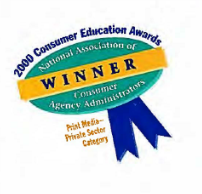
That napkin, which I no longer have, was the protype for a more “sophisticated” sketch on a piece of paper. That piece of paper turned into a consumer education brochure designed to show consumers the credit report dispute resolution process in a clear, easy to understand, graphic form. The brochure was so powerful that a national consumer group gave it an award in 2000.
An impactful book I read years ago was The Back of a Napkin by Dan Roam. Roam and I are on the same page (or the same napkin) when he said in a TEDx Talk that “there is nothing [more powerful] than being able to tell a story of what matters to you in a way so that it matters to someone else.” Visual storytelling can strongly support that message, and it is more important than ever for anyone trying to convey a complicated message in a fast-paced environment. Roam wrote, “…there is no more powerful way to see hidden solutions than to pick up a pen and draw out the pieces of our problem.” The humble napkin can be more powerful than the polished PowerPoint presentation.
An article in Harvard Business Review noted that “visual communication is a must-have skill” for leaders. The power of visual communication has hardly been more important. Gen Z, those born between 1997 and 2013, is a group of emerging consumers.[1] Uubex, a marketing company, calls Gen Z a “visual-driven generation”. For people like me who work to inform members of Congress, state legislators, and attorneys general of the issues of the day, visual communication is critical.
In the 117th Congress, which ran from 2021 to 2023), 56.4% of Congressional staffers were between 21 and 29 years old, meaning that they were born between 1994 and 2002. These late Millennials and Gen Zs are key decisionmakers on Capitol Hill. Although I have not seen data on the age of legislative staff in state capitals, I assume the average age is even younger than their counterparts inside the Beltway.
The future of communication is visual. Thank you to Qargo Coffee for helping show the power of visual communication and reminding me that some great ideas can come on the back of a cocktail napkin.

[1] “Gen Z is poised to be nearly a third of the population by 2030 and has approximately $360 billion in disposable income today. Their median age is 18 years old, with the eldest around 26.” Three Steps for Cracking the Gen Z Marketing Code, Forbes, Aug. 29, 2023, https://www.forbes.com/sites/onmarketing/2023/08/29/three-steps-for-cracking-the-gen-z-marketing-code/.
 Eric J. Ellman